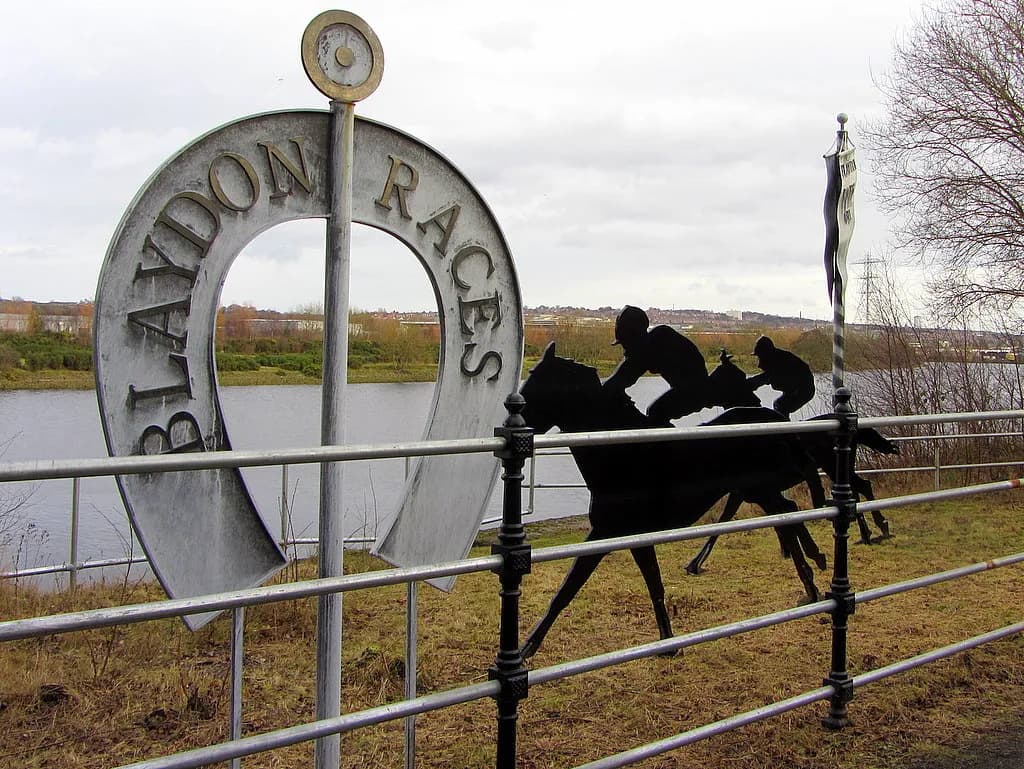
Blaydon has given Tyneside one of its best-known songs.
And the song was about going to the races.
More than 160 years after George Ridley wrote The Blaydon Races, horse racing remains part of life on Tyneside, although the action has long since moved away from the banks of the Tyne.
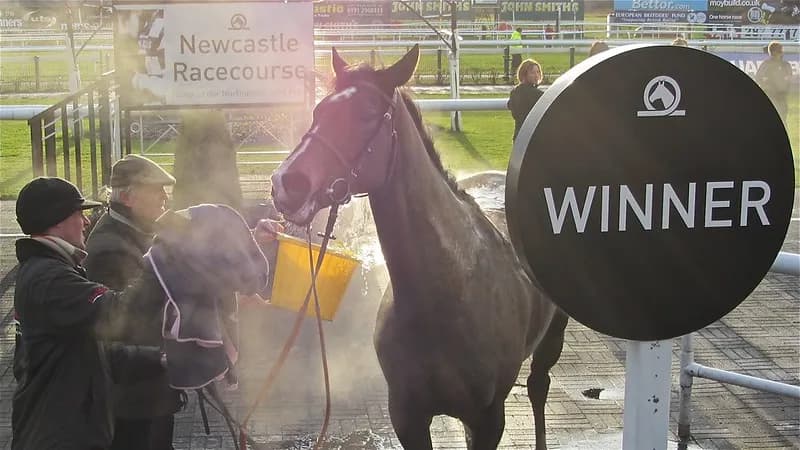
This October, Newcastle Racecourse at Gosforth Park still has five meetings to come, including four evenings of Flat racing under the floodlights and an afternoon of jumps on the turf.
For Blaydon readers, it is a good excuse to look back at the real races behind the song, how the Northumberland Plate became the Pitmen's Derby, and why Gosforth Park is now one of the busiest racecourses in Britain.
Five October meetings still to come
Newcastle's remaining October programme is:
Monday 12th October, floodlit Flat racing
Friday 16th October, QuinnBet Floodlit Racenight
Tuesday 20th October, floodlit Flat racing
Tuesday 27th October, Bark in the Park jump racing
Friday 30th October, floodlit Flat racing
The four Flat meetings are staged on Newcastle's Tapeta all-weather track.
The 27th October fixture is different.
That afternoon sees the return of jump racing on the turf, with hurdles and chases on a seven-race card.
Then, looking a little further ahead, Newcastle stages one of its biggest jump meetings of the year on Saturday 28th November when the Fighting Fifth Hurdle returns to Gosforth Park.
The song came before the famous raceday
The story of the Blaydon Races is as much about the journey as the horses.
George Ridley, usually known as Geordie Ridley, was born in Gateshead in 1835.
After an industrial accident left him unable to continue heavy manual work, he became a music hall performer and songwriter.
His most famous work was The Blaydon Races.
Ridley first performed the song in Newcastle in June 1862, just days before the race meeting it described.
The song follows a chaotic journey west from Newcastle towards Blaydon.
It begins around the Cloth Market before sending its passengers along Collingwood Street and out towards Scotswood Road.
Along the way there are overcrowded vehicles, accidents and an assortment of characters who would have been familiar to local audiences at the time.
One of them was John Brown, Blaydon's bellman.
The original brass bell associated with him survives today and is still used to start the modern Blaydon road race each June.
Ridley died in 1864, still only a young man.
The song did not.
Generations later it remains sung across Tyneside and at St James' Park, while the modern Blaydon Race continues to follow the old Newcastle-to-Blaydon tradition each 9th June.
The Blaydon Races were real
The horse races themselves existed before Ridley wrote about them.
Racing took place around Blaydon from the early nineteenth century.
The first course was close to the riverside, but the arrival of the railway disrupted racing there.
It later returned on Dent's Meadow, an island in the Tyne.
From 1861 until 1865, horses raced there while spectators crossed towards the course using a temporary bridge formed from barges.
It is an extraordinary scene to imagine today.
Thousands of spectators heading towards an island in the Tyne to watch horse racing, long before bridges, roads and industry transformed the landscape around Blaydon.
The races eventually moved again.
By the late nineteenth century they were being staged at Stella Haughs.
That version of the meeting lasted until 1916.
Its ending was memorable for all the wrong reasons.
Following the disqualification of a horse during the September meeting, disorder broke out among the crowd.
The racecourse buildings were damaged and the grandstand was set alight.
The second day was abandoned.
Horse racing at Blaydon never returned.
Newcastle had its own people's race
While Blaydon had its races and its song, Newcastle developed a racing tradition that became just as closely linked with the working communities of the North East.
The Northumberland Plate was first run on the Town Moor in 1833.
For generations, the meeting coincided with holidays for local miners.
That connection earned the race the nickname by which it is still widely known today: the Pitmen's Derby.
The race was originally staged during the week, with thousands travelling into Newcastle for the occasion.
It remained on the Town Moor until 1881.
Then racing moved north.
Gosforth Park takes over
Newcastle Racecourse opened at High Gosforth Park in 1882.
The new course included facilities for both Flat and jump racing, along with a grandstand and stabling.
The Northumberland Plate moved with it.
More than 140 years later, racing is still taking place on the same estate.
Today Newcastle Racecourse sits within more than 800 acres at High Gosforth Park and hosts more than 80 fixtures in a typical year.
It remains home to the Northumberland Plate as well as major jump races including the Fighting Fifth Hurdle and Eider Chase.
The Pitmen's Derby nickname survives too.
The mining holidays that created it may have disappeared, but the race remains one of the biggest sporting days of the North East summer.
Then the floodlights arrived
The biggest modern change at Newcastle came in 2016.
The old turf Flat course was replaced with a Tapeta all-weather surface.
Floodlights were installed at the same time.
That transformed the calendar.
Newcastle no longer had to rely on summer afternoons for its Flat racing.
It could race on dark October evenings, through winter and in weather that might have caused problems on turf.
The jumps course remained.
So today Gosforth Park effectively offers two different types of racing in the same place.
Flat horses race on the all-weather surface.
Hurdlers and steeplechasers compete on turf inside it.
Racing straight towards the lights
Newcastle's all-weather course has one feature that makes it particularly unusual.
It has a straight mile.
The racecourse describes it as the only floodlit all-weather straight mile in the world.
That means races up to a mile can be staged without the horses going around a bend.
For spectators, the sight of a field spreading across the width of the track and racing directly towards the finish under the floodlights can be one of Newcastle's most striking sights.
The longer races use the oval course.
Newcastle is broad and galloping compared with some of Britain's tighter all-weather tracks, giving horses time to find their rhythm.
It is one reason Flat racing here can feel surprisingly different from the smaller, sharper courses elsewhere in the country.
An easy evening out from Blaydon
Floodlit racing also makes Newcastle particularly practical for an evening visit.
On Monday 12th October, for example, the current programme runs from 5.00pm until 8.30pm.
That makes it entirely possible to finish work, head into Newcastle and still see a full evening of racing.
The same pattern continues through the month.
There is no need for a first-time visitor to understand every detail of the form book.
Arrive early enough to find the parade ring and watch the horses before each race.
Then follow them towards the course and find somewhere close to the finishing line.
There is no obligation to bet.
If you do decide to have a bet, choose what you are comfortable spending beforehand and treat it as part of the evening rather than something that has to happen on every race.
And for an October night at Gosforth Park, a warm coat is considerably more important than trying to dress for an occasion.
Bark in the Park brings back the jumpers
Tuesday 27th October changes the pace completely.
Newcastle's Bark in the Park meeting is an afternoon of National Hunt racing on the turf.
The current programme includes hurdle races and steeplechases over distances ranging from around two miles to almost three miles.
It is also a dog-friendly raceday, with the course promoting activities for dogs and their owners alongside the racing.
For anyone who has only seen Newcastle under the floodlights, it offers a chance to see a completely different side of the racecourse.
The fences come out.
The races get longer.
And attention starts turning towards the winter jump season.
Following the song from Blaydon
There is another way to make a day of it.
The route from Blaydon into Newcastle is part of the story itself.
The modern railway brings passengers along the Tyne Valley line towards Newcastle Central.
From there, you are close to several places associated with the song.
The Cloth Market was the heart of Newcastle's nineteenth-century music hall scene.
A plaque marks the site associated with Balmbra's, where Ridley first performed The Blaydon Races in 1862.
From there, Collingwood Street leads towards the route taken in the song before it heads west towards Scotswood and Blaydon.
The original race bell is also preserved in Newcastle's Discovery Museum.
More than a century and a half later, pieces of the song are still scattered across the city.
Getting to Gosforth Park
Newcastle Racecourse sits at High Gosforth Park to the north of the city.
From Blaydon, the simplest public transport route is generally into Newcastle city centre first.
Bus services from Haymarket then run towards the racecourse, while Regent Centre and Four Lane Ends are the nearest Metro stations.
Drivers can approach via the A1 and follow signs towards Gosforth Park.
For evening racing, it is worth checking return transport before setting off, particularly for the later races.
From one racecourse to another
There is something fitting about the journey.
The original Blaydon horse races disappeared more than a century ago.
The island course has gone.
The racecourse at Stella Haughs has gone.
Much of the industrial landscape George Ridley described has changed beyond recognition.
But Tyneside still goes racing.
Today, instead of heading west towards an island in the Tyne, the crowds travel north to Gosforth Park.
And on four evenings this October, they will do it under the floodlights.
Newcastle races on 12th, 16th, 20th, 27th and 30th October, with the 27th October meeting switching from the all-weather Flat track to jump racing on turf.
Check Newcastle Racecourse before travelling for the latest race times, tickets, transport information and any changes to the programme.